The Blueprint
We map your jobs, steps, materials and how work moves through your shop.
$1,500 CADCredited to your build within 30 days.
Every job broken into steps, with planned dates, who's on each one, what it's waiting on and the materials it needs. Move a step or have a supplier run late, and every affected job and customer order updates itself.
For makers, workshops and small manufacturers.
A customer asks if their order is ready, so you walk out to the shop to find out. A material runs out halfway through a job. A promised date was a best guess, and nobody notices it slipping until the customer calls.
The information exists. The order is in one place, the plan is on the whiteboard, the supplies are on a shelf and the supplier's email is in someone's inbox. Nothing connects them, so the owner does it by hand, every day.
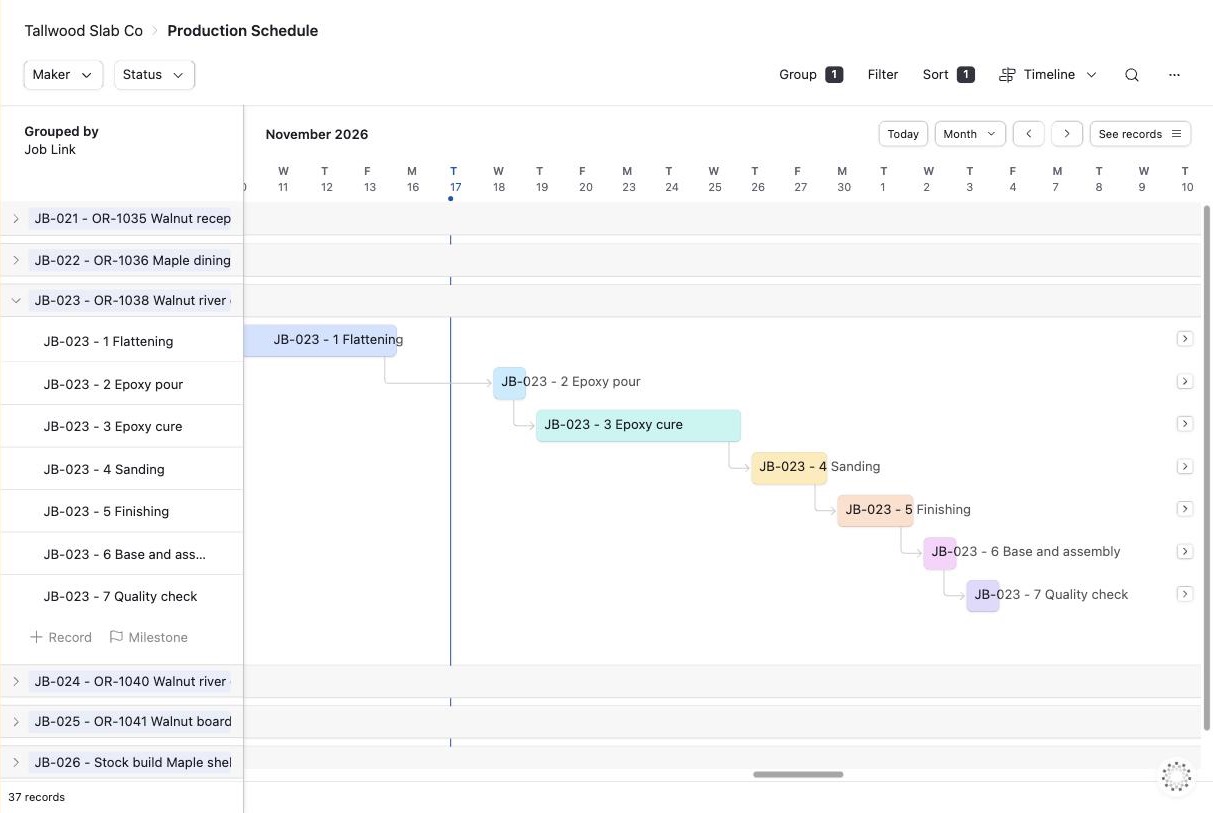
Each job is broken into its real steps. Each step has planned dates, a person and the step it's waiting on, shown on a Gantt schedule the whole team can see.
Replaces: the whiteboard, and walking to the shop to ask.
Steps that use materials say how much they need. The system compares that with what's on the shelf, what other jobs need and what's on order from suppliers.
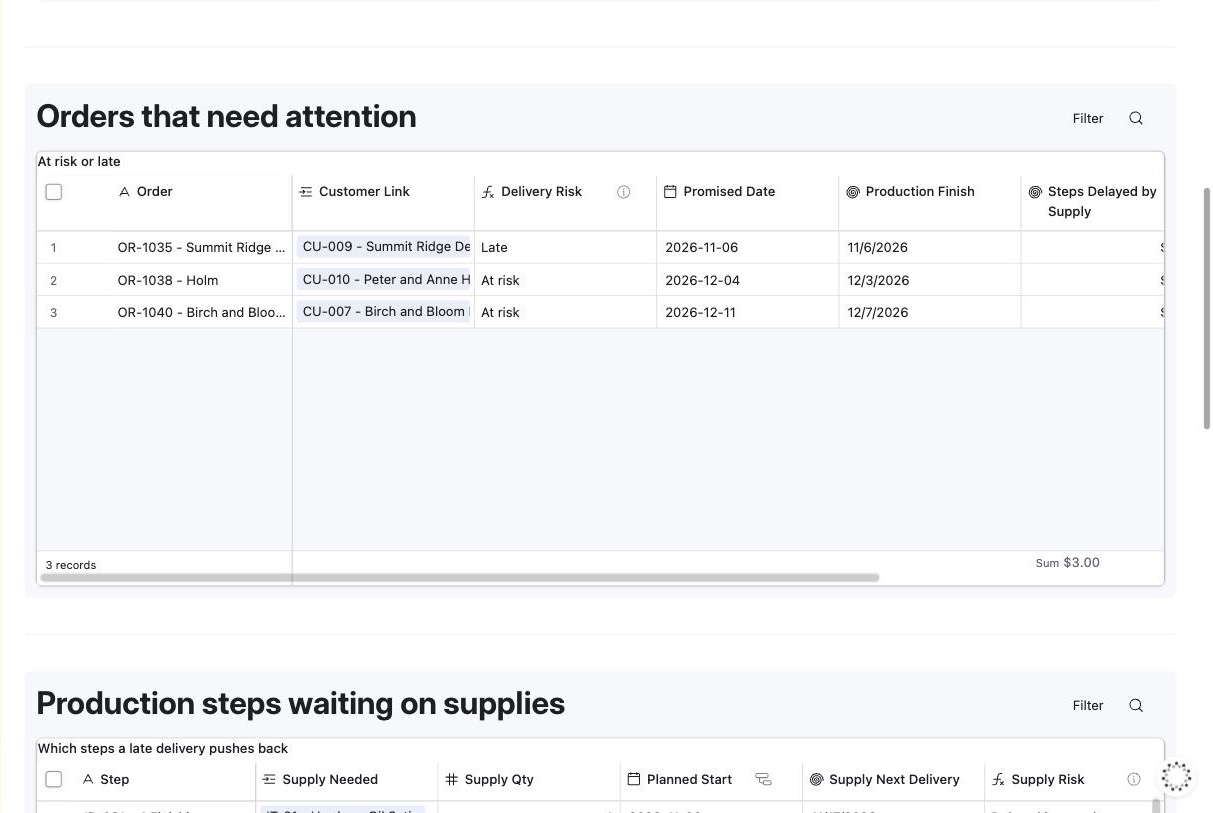
When a supplier pushes a delivery back, the steps that needed it before the new date are flagged right away, and so are the customer orders they belong to. It updates itself the moment the date changes. Nobody has to cross-check the schedule against the purchase orders.
When a step is marked done, the materials it used come off the shelf automatically, so the next job's numbers are already right.
Every customer order compares its promised date with its production plan and the materials it depends on.
Replaces: finding out a job is late when the customer calls.
Some jobs are built before anyone orders them. Those stock builds sit on the same schedule as custom orders. While they're in progress they count toward what's coming, and when they're finished the pieces are added to inventory automatically, ready to sell in the showroom or online.
Owners in these industries ask us for this most.
"Alison and I worked together on fuel supply and delivery contracts and various other initiatives over nearly five years. She was always prompt, professional and detail oriented."
Kerry Mehaffey, Executive in Indigenous government and business
Production tracking is an add-on to our core system, so it's connected to your customers, orders, inventory, purchasing and invoicing from day one.
We map your jobs, steps, materials and how work moves through your shop.
Core system plus production tracking, built and tested with your real jobs.
We keep it running as your products and processes change.
Prices are before tax. Canadian clients pay GST/HST on top. Payment is by credit card.
Yes. Each person gets a simple screen showing their steps for the week, and marking a step done takes one tap on a phone or tablet.
Yes. Repeat products can start from a standard set of steps, and batches can be tracked as one job with a quantity.
It can. Logging hours against each step shows where time goes and helps you price the next job.
It covers what most small manufacturers use an MRP for: what to make, when, with which materials, and what to order. Without the cost and complexity of a full MRP or ERP.
That's the point of a custom build. The steps, materials and rules follow how your shop actually works.
Tell us how work moves through your shop today. In 30 minutes you'll know what production tracking would look like for you.
Book a free 30-minute call