See what one system looks like.
This is a working system we built for Tallwood Slab Co, a 7-person live edge furniture maker that sells in a showroom, through an online store and to interior designers. The company is made up. The system, the numbers and every automation are real.
Your tools each see one slice of your business.
A quoting app makes quotes. Accounting software keeps the books. A scheduling tool holds the calendar. Each one is good at its slice, and none of them can tell you that a late supplier is about to break a promise you made to a customer. That answer lives in the gaps between tools, which is usually the owner's head.
In one system, every record is linked to the ones it belongs to: the customer, the order, the items, the slab, the production steps, the supplies they use, the purchase orders bringing those supplies, the payments, the shipment and the tax. So the system can answer the questions the owner gets asked all day.
The whole business on one screen.
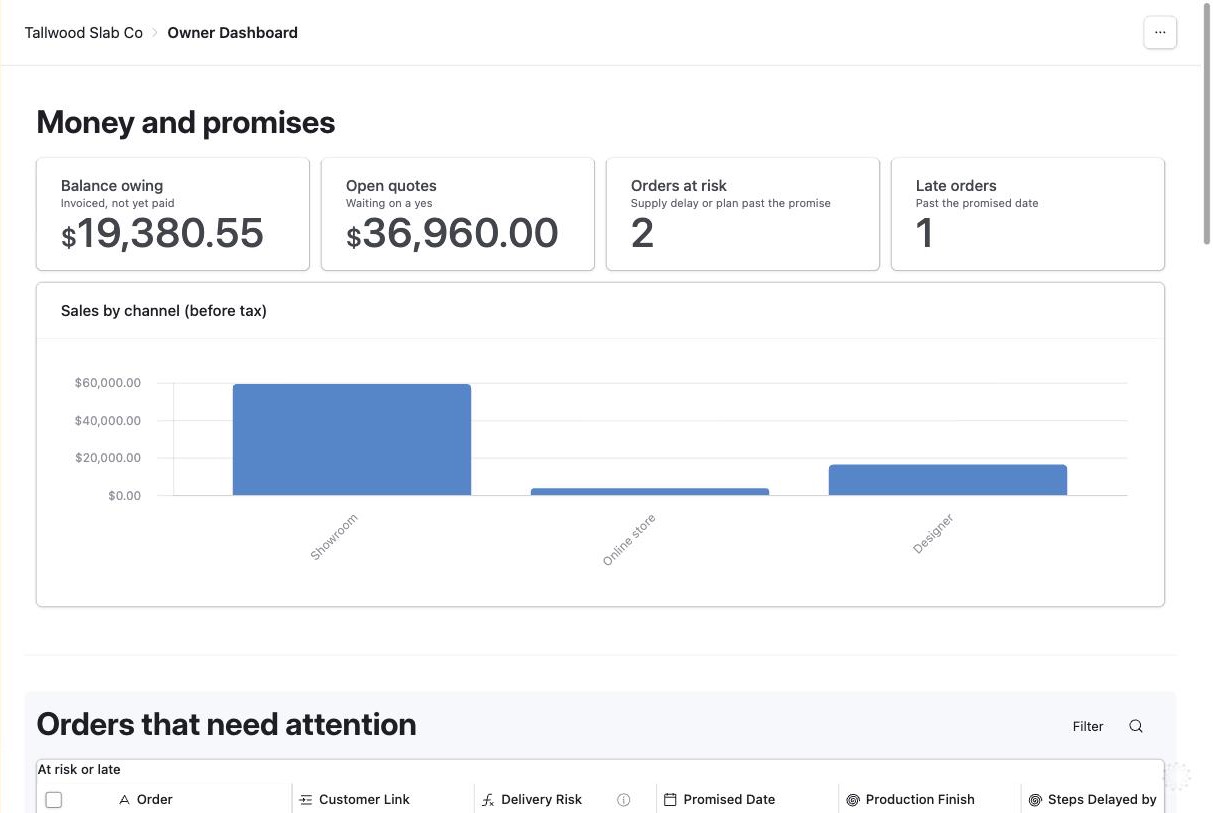
The owner opens one page on Monday and sees what matters this week, without asking anyone.
- Money owed to the business and quotes waiting on a yes
- Orders at risk and orders already late, with the reason
- Production steps waiting on supplies
- Stock that needs reordering or making
- GST owing for the quarter
Replaces: the Monday round of "where are we at?" questions.
A supplier runs late. The owner knows which customers it affects.
Here's what happens in the demo when the epoxy supplier pushes a delivery from November 17 to November 28.
Someone updates the expected date on the epoxy order. That's the only thing anyone types.
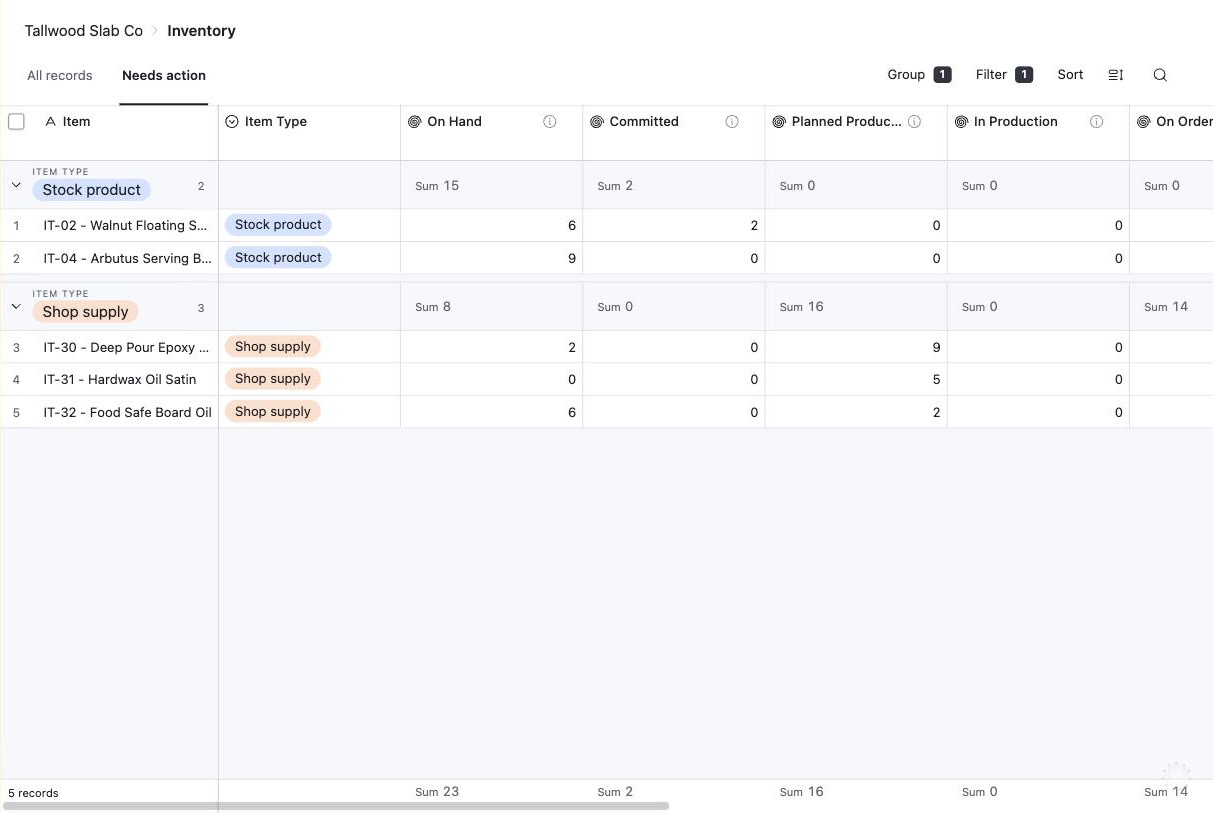
2 kits on hand, 9 needed by the next three pours. The next delivery is now November 28.
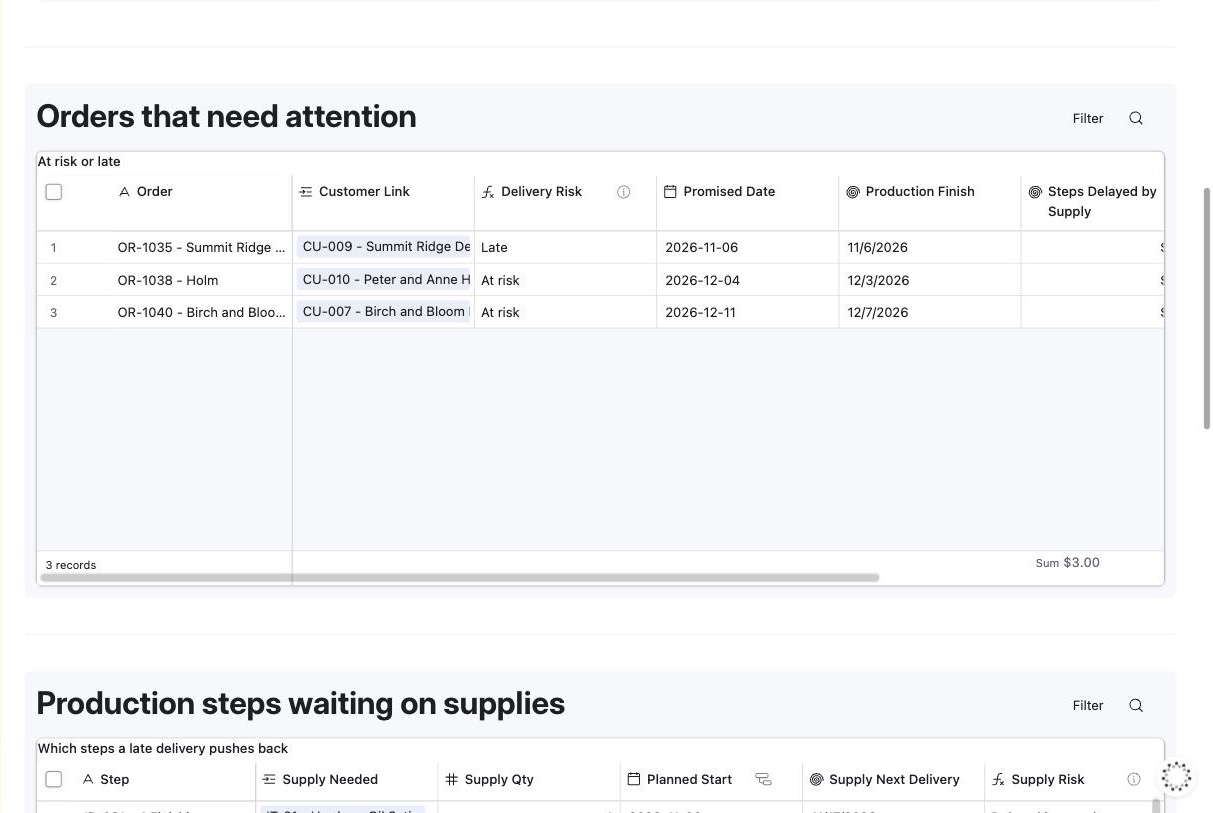
Pours planned before the 28th show "Delayed by supply". The one after shows "Waiting on delivery".
Each flag rolls up to its job and its customer order, next to the date that was promised.
The dashboard lists both orders. The owner calls those two customers this week, before they have to ask.
Every promised date, checked against the plan.
Each order compares the date the customer was promised with the production plan and the supplies it depends on.
And it all updates itself. The moment someone moves a step on the production schedule or a supplier changes a delivery date, every affected order re-checks its promise on its own. Nobody has to go through the list again.
- "Late" when the promised date has passed
- "At risk" when a supply is delayed or the plan finishes after the promise
- "On track" when nothing stands in the way
Replaces: finding out about a problem when the customer calls.
Every step of every job, on one schedule.
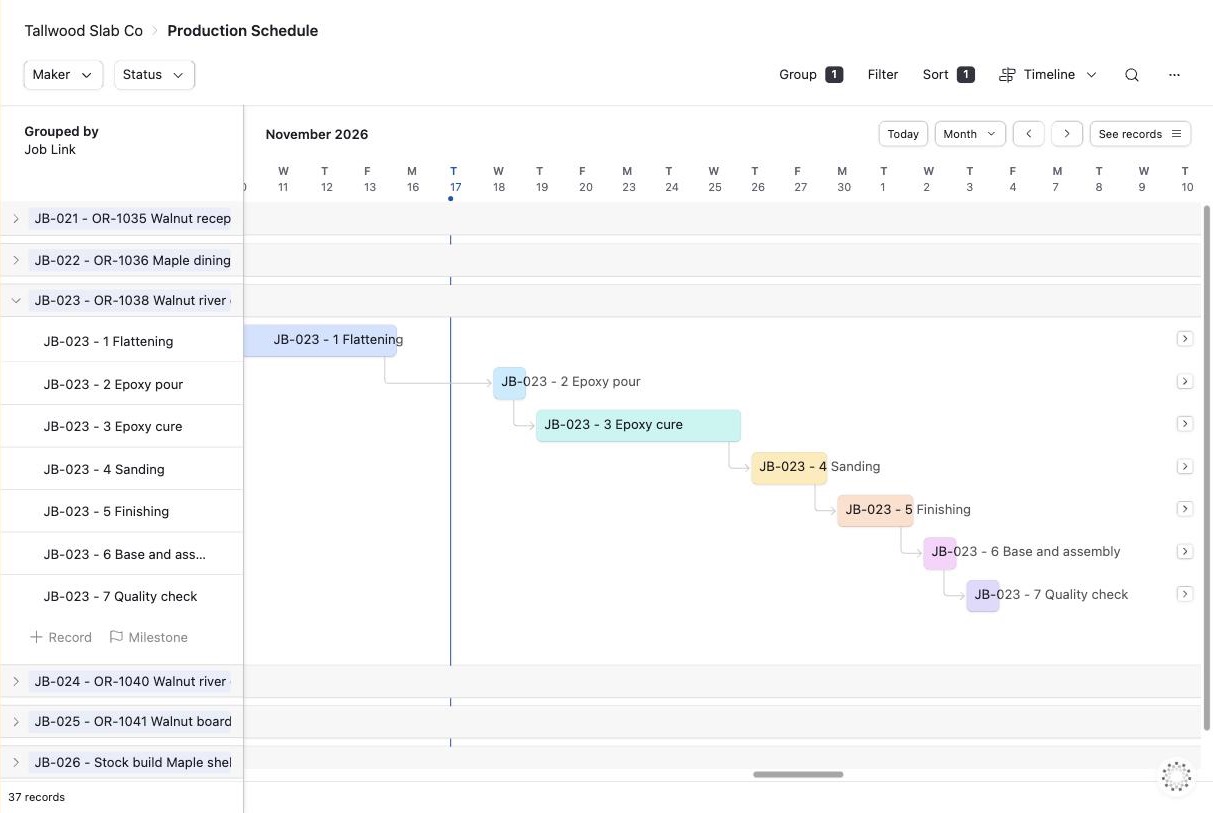
Each piece moves through its own steps: flattening, epoxy pour, cure, sanding, finishing, base and quality check. Each step has planned dates, a maker and the step it's waiting on.
- Drag a step and everything after it moves with it
- See who is working on what, this week and next
- Steps that use supplies know how much they need
Replaces: the whiteboard in the shop and the schedule in the owner's head.
Stock that counts itself.
Nobody types in how many are left. Every change is recorded as it happens, and the numbers follow.
- On hand, from every delivery received, piece made, sale shipped and supply used
- Committed to orders, needed by production, and on order from suppliers
- An alert to reorder supplies or make more stock, with a draft purchase order ready
Replaces: stock counts on a clipboard and "I thought we had more of those."
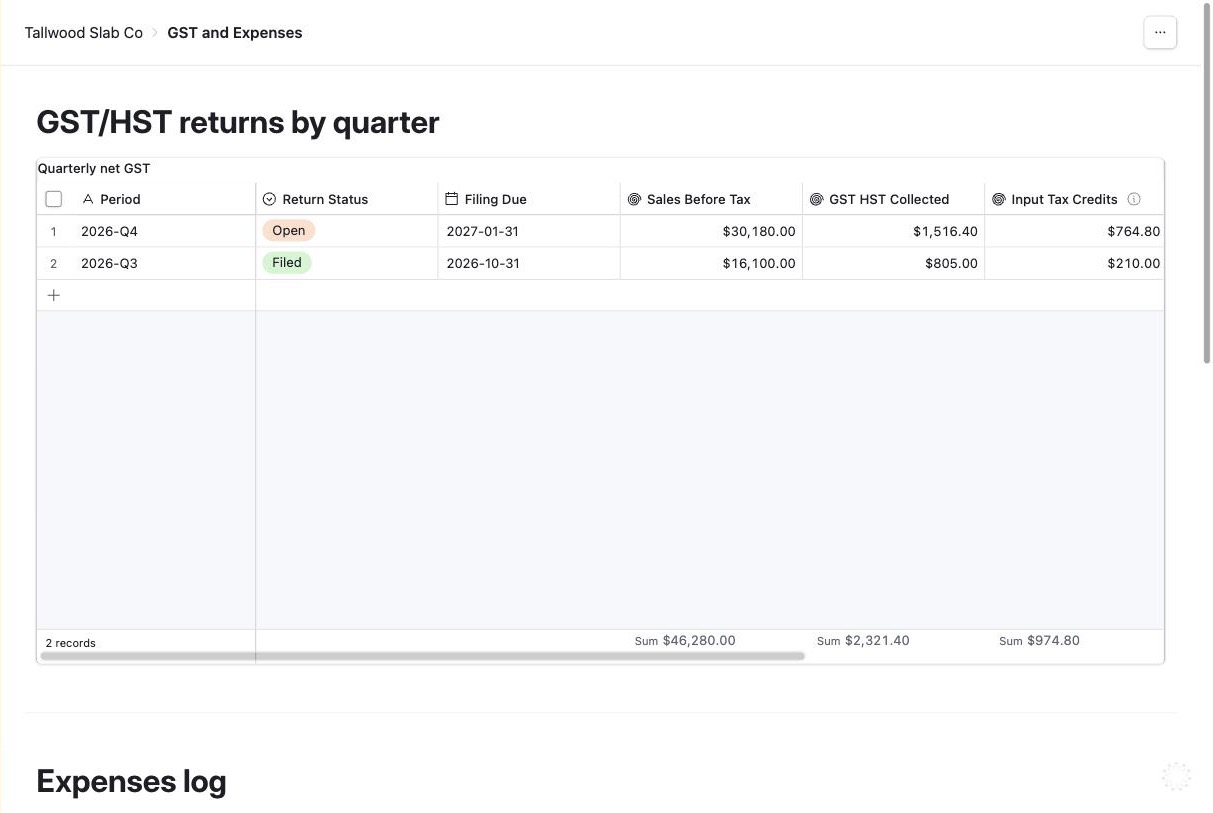
The right tax on every line, and GST ready each quarter.
Tax is worked out line by line from where the order ships and what the item is. A BC order gets GST and PST, Alberta gets GST, Ontario gets HST, and an order to Seattle is zero-rated. A gift card on the same order isn't taxed at all.
- Tax rates for every province, territory and export
- An expenses log with the GST paid on each one
- Net GST owing for each quarter: collected minus input tax credits
Replaces: rebuilding the GST return from receipts every quarter.
What happens without anyone typing.
Built with Airtable's standard automation steps, so your team can see what each one does and change it later.
Ticking a purchase order line as received adds the goods to stock.
Stock items come out of inventory and the order lines are marked fulfilled.
The supplies it used come off the shelf.
The new pieces are added to stock, ready to sell.
A draft purchase order is created for the right supplier at the usual price.
A review request is created for that customer.
The order is linked to its GST quarter.
Its GST paid counts toward that quarter's input tax credits.
Your system won't look like this one.
A furniture maker needs slabs, epoxy and pour schedules. A contractor needs crews and job sites. A distributor needs routes and reorder points. Every Northcamp system starts with a Blueprint: we map how your business actually runs, then build around that, from a core every business needs plus the pieces yours does.
"Alison and I worked together on fuel supply and delivery contracts and various other initiatives over nearly five years. She was always prompt, professional and detail oriented."
Kerry Mehaffey, Executive in Indigenous government and business
Your whole business. One place.
Tell us how your business runs today. We'll show you what the same connections would look like for you.
Book a free 30-minute call